Andy Burnham Inheritance Tax Plan Opens Door to £35bn Tax


Andy Burnham’s inheritance tax plan is not a confirmed UK tax reform and remains a political proposal focused on changing how wealth contributes to public services.
Instead of keeping the current inheritance tax structure, Burnham has suggested replacing it with a care-focused funding model, including earlier proposals for a flat 10% estate contribution to support universal social care and broader taxation during a person’s lifetime rather than mainly after death.
Key takeaways:
- Burnham has repeatedly said he would abolish inheritance tax in its current form, but not remove taxation altogether.
- One previously discussed option was a national care levy, alongside a 10% flat estate charge to help fund social care.
- Separate proposals also explored land value taxation, where public estimates suggested a 5% levy could raise around £35.5 billion annually, while a 1% levy could generate roughly £71 billion.
- These proposals remain part of political discussion, and no formal UK policy change has been announced or implemented.
What Is Andy Burnham’s Inheritance Tax Plan?
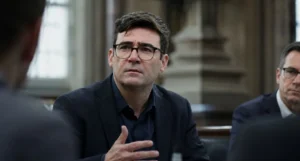
Andy Burnham’s inheritance tax plan refers to a long-running position he has expressed over several years rather than a current government proposal. His central argument is that inheritance tax should not remain in its present form if a fairer and more predictable way of funding social care can replace it.
Burnham has argued that families often experience uncertainty when care costs and estate planning collide. Speaking publicly, he said he would “abolish inheritance tax in its current form but replace it with a care levy which everybody would pay but obviously the wealthiest would pay the most.”
His comments connect tax policy with social care reform rather than simply reducing taxation. The broader idea is that people would contribute through a structured system instead of potentially facing care costs later in life or estate-related tax concerns after death.
The proposal remains a political position and has not become government policy.
Does Andy Burnham Want To Abolish Inheritance Tax?
In public statements, Andy Burnham has repeatedly opened the door to abolishing inheritance tax, but usually with an important condition, replacing it with another funding mechanism.
His position is not framed as removing taxation entirely. Instead, he has argued that wealth should be taxed more effectively while people are alive and that social care should receive more reliable funding.
Burnham later stated:
“I would be prepared to accept the abolition of inheritance tax on condition that we tax the wealthy properly while they are alive.”
He has also acknowledged public frustration around inheritance tax, saying there is “a great resentment” towards the current system.
That distinction matters because the proposal is not presented as a tax cut. Rather, it attempts to redesign where and when tax is collected. Whether that would leave households paying more, less, or differently remains unclear without detailed policy proposals.
What Could Replace Inheritance Tax Under Andy Burnham’s Plan?

Burnham’s comments suggest inheritance tax could be replaced by a different model designed around care funding and wider tax reform. Rather than focusing only on what happens after death, the proposal shifts attention towards ongoing contributions and broader wealth taxation.
What Is A National Care Levy?
One of Burnham’s most repeated ideas is a national care levy. The principle is that social care would receive dedicated funding through a structured contribution system rather than relying heavily on estate taxation or individuals paying unpredictable care bills.
Burnham described the concept in practical terms, saying families should not face the experience of “draining your parents’ bank accounts to pay for care”.
Potential aims include:
- Greater certainty for families
- More stable social care funding
- Reduced pressure on NHS discharge systems
How Would A Flat Estate Charge Work?
During his time as health secretary, Burnham discussed applying a flat 10% charge on estates after death. Unlike inheritance tax thresholds and rates, this concept would apply through a simplified structure intended to support universal social care funding.
Supporters argue a flatter model could appear easier to understand. Critics question whether lower headline rates would still increase the number of estates contributing.
Wealth manager Ian Cook commented that a flat estate charge “would be something many people would be very open to”, but added that it “sounds too good to be true”.
Why Is Social Care Central To The Proposal?
Burnham consistently links tax reform to fixing social care. He argued hospitals are carrying growing pressure because patients who are medically fit cannot always move into care settings quickly.
His position is that fixing social care could reduce wider public costs. The proposal therefore sits less as an inheritance tax debate and more as a long-term public funding discussion.
How Could The Plan Affect UK Families And Homeowners?
For households, the biggest question is not whether inheritance tax disappears but what replaces it. A move towards care-related contributions could alter how families think about retirement, estates and property wealth.
Possible areas of impact include:
- Estate planning strategies
- Expectations around care costs
- Retirement financial planning
- Property and asset decisions
Supporters may see value in predictable care funding. Others may worry that broader wealth-based charges capture more middle-income households over time. For homeowners, any shift from inheritance tax to lifetime wealth taxation could change when costs arise.
Families with modest estates may also watch closely because recent debate around pension treatment and estate values has increased public attention on inheritance tax generally.
Until detailed legislation exists, practical financial decisions should remain based on current UK tax rules rather than political proposals.
How Does The Inheritance Tax Plan Connect To Burnham’s Wider Tax Ideas?
Burnham’s inheritance tax comments sit within a wider conversation about taxation and public services.
What Is A Land Value Tax?
Burnham has also argued that land in Britain may be under-taxed. A land value tax charges the value of land itself rather than buildings placed on it. Figures discussed publicly referenced UK land values estimated at approximately £7.1 trillion in 2024.
Based on those estimates:
- A 0.5% levy could raise around £35.5 billion annually
- A 1% levy could generate roughly £71 billion per year
Supporters say this could encourage productive land use. Critics argue many ordinary households could ultimately bear part of the cost.
Could Council Tax Or Stamp Duty Be Reformed?
Burnham has previously supported wider property tax reform. His arguments have included criticism of council tax and earlier support for replacing stamp duty mechanisms. Supporters say reform could modernise an ageing system. Critics argue changing one tax often means introducing pressure elsewhere.
What Could This Mean For Small Businesses?
Small businesses may pay attention because broader tax reform can influence:
- Commercial property costs
- Business rates policy
- Local government funding
- Consumer spending patterns
Hospitality businesses have also featured in discussions around rates reform and local funding approaches.
What Are The Confirmed Facts, Proposed Changes, And False Claims?
The discussion around Andy Burnham’s inheritance tax plan often blends confirmed statements with assumptions.
| Category | Breakdown |
| Confirmed Facts | Burnham has publicly discussed abolishing inheritance tax in its current form and replacing it with alternative funding approaches. |
| Proposed Changes | National care levy, flat estate contribution, land value taxation and broader reform ideas. |
| False Claims | There is currently no confirmed government plan to abolish inheritance tax or introduce Burnham’s proposals. |
It is also inaccurate to describe these ideas as active UK tax law. Political proposals often evolve, and implementation details matter more than headline announcements.
Burnham’s public comments have focused repeatedly on fairness, care funding and changing how wealth contributes to public services. Readers should separate debate from legislation and avoid making financial decisions based on campaign discussion alone.
Why Are Experts And Politicians Divided On The Plan?
Supporters and critics view the proposal through different lenses.
Supporters argue:
- Social care requires sustainable funding
- Simpler taxation could reduce confusion
- Families may prefer predictable systems
Critics argue:
- Replacement taxes may expand the number of people paying
- Wealth taxes can alter behaviour
- Land and property reform may affect ordinary households
Tax expert Dan Neidle warned against assuming land taxation affects only wealthy owners, arguing that many normal households would ultimately be included.
Meanwhile, debate inside Labour and wider politics continues over whether wealth taxation or broader economic growth should fund public services.
The division reflects a bigger question: who should pay, when, and through which system?
What Should UK Readers Watch Before Making Tax Decisions?
UK readers should focus on confirmed policy rather than political discussion. Inheritance tax rules today remain governed by current legislation, thresholds and HMRC guidance.
When following proposals, watch for:
- Published policy documents
- Costed implementation plans
- Parliamentary commitments
- Independent tax analysis
Households should also distinguish between inheritance tax, estate charges, land taxation and care funding because they are separate mechanisms.
A practical approach is to review financial planning regularly rather than react to headlines. Political debate can influence future direction, but financial decisions work best when based on existing law and verified changes.
Conclusion
Andy Burnham’s inheritance tax plan is best understood as a proposal to redesign how social care and wealth contributions work rather than a straightforward promise to remove tax. His comments have consistently linked inheritance tax reform with a national care levy, estate contributions and broader tax changes including land reform.
Supporters see an opportunity to create more predictable funding and reduce pressure on families. Critics question whether replacement taxes would ultimately affect more people.
At present, these ideas remain political proposals rather than UK law. For households and small businesses, the most useful approach is staying informed while planning according to current rules.
FAQs
Is Andy Burnham proposing to remove inheritance tax completely?
Not exactly. Andy Burnham has discussed abolishing inheritance tax in its current form but has consistently linked that idea to replacing it with alternative funding mechanisms rather than eliminating taxation altogether.
Has Andy Burnham’s inheritance tax plan become UK law?
No. The proposal remains part of political discussion and public statements and has not been introduced as confirmed UK legislation.
Would a national care levy replace care home costs?
The concept discussed by Burnham suggests creating a more structured approach to funding social care. However, there are no final policy details showing exactly how individual care costs would change.
Could more families pay tax under a replacement system?
That depends entirely on how any future system would be designed. Some experts argue broader contribution models could include more households even if headline tax rates appear lower.
How is a land value tax different from inheritance tax?
Inheritance tax generally applies to estates after death, while a land value tax focuses on the value of land ownership itself. They are separate tax concepts even though both appear in wider discussions about wealth taxation.
Would small business owners be affected by these proposals?
Potentially, depending on whether future reforms include business property, rates changes, or wider asset taxation. No confirmed policy currently outlines direct impacts on small businesses.
Should people change estate planning based on these discussions?
Most financial decisions should continue to follow current UK tax rules rather than political proposals. Reviewing plans with qualified advisers after confirmed policy changes is usually the more practical approach.

John covers a wide range of business topics including technology, productivity, startups, digital transformation, and business development for modern companies.

British Coal Pension Boost: 41% Increase for UK Members Now
The British coal pension boost is a major change that increases pension payments for thousands of former mineworkers and British Coal staff members. Following a government decision to…

DWP Pensioner Benefits August Payments: Will Your Money Arrive Early?
DWP pensioner benefits August payments will arrive early if the usual payment date falls on a bank holiday. For pensioners in England, Wales and Northern Ireland, payments due…
Insights for the Modern
UK Small Business.
Join 15,000+ owners receiving tactical analysis on finance, marketing, and technology. No clutter.
Zero spam. Unsubscribe in one click.