Andy Burnham Land Tax: Impact on House Prices and Taxes

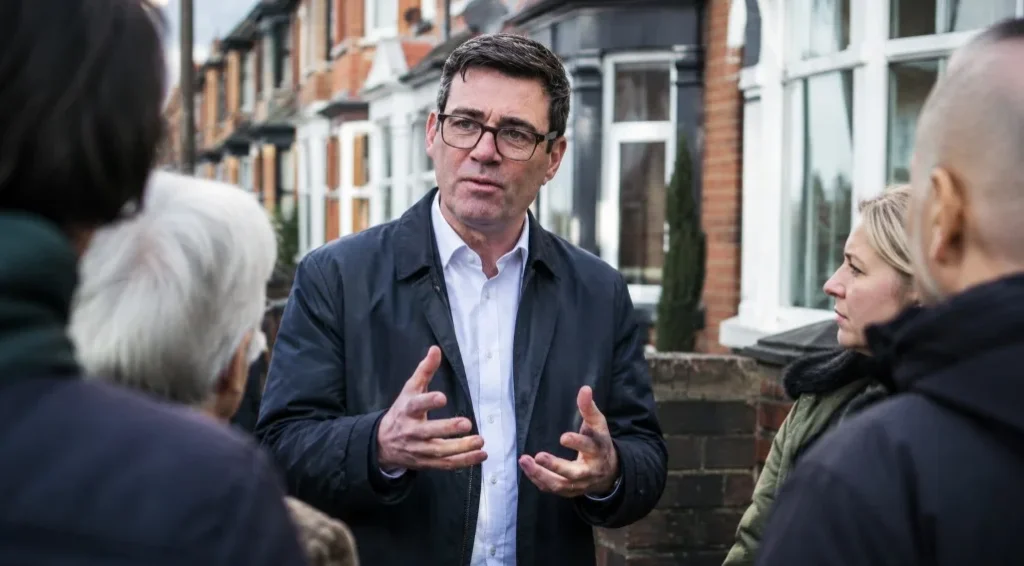
Andy Burnham’s land tax proposal centres on replacing or reforming parts of the UK’s current property tax system through a land value or proportional property tax.
While no policy has been formally announced for Government, Burnham has repeatedly argued that land is under-taxed and that council tax is “highly regressive”. Supporters believe reform could make property taxation fairer, while critics warn it could affect house prices and create challenges during the transition.
Key takeaways:
- Burnham has expressed support for land value taxation.
- Some proposals suggest replacing council tax and stamp duty.
- A 0.48% proportional property tax has been promoted by Fairer Share.
- House price impacts could vary significantly by region.
- No nationwide land tax policy has been officially introduced.
What Is Andy Burnham’s Land Tax Proposal?
Andy Burnham’s land tax proposal refers to his long-standing support for reforming how property is taxed in the UK. Rather than relying on council tax bands based on 1991 property values and stamp duty charges when homes are bought, supporters of reform favour a system linked more closely to current property or land values.
Burnham recently stated:
“I think land is under-taxed” and added that he has “long been persuaded of the argument for a land value tax.”
The idea receiving the most attention is a proportional property tax that could replace both council tax and stamp duty. Campaign group Fairer Share advocates a 0.48% annual charge on property values. Under that model, a home valued at £270,000 would pay approximately £1,296 per year.
Although Burnham is not currently campaigning on a specific land tax policy, his comments have reignited debate about property taxation, regional inequality and housing market reform across the UK.
Why Does Andy Burnham Believe Land Is Under-Taxed?
Burnham’s position is linked to concerns that the UK’s property tax system no longer reflects modern housing values or economic realities. He has repeatedly criticised council tax and argued that taxation places too much burden on work rather than wealth and assets.
Speaking previously, Burnham said:
“We’ve overtaxed people’s work and we’ve undertaxed people’s assets and wealth and that balance should be put more right.”
Supporters of reform argue that:
- Council tax bands remain based on 1991 valuations.
- Property wealth has grown substantially in many regions.
- Land cannot be moved offshore or hidden.
- Taxing land may be economically more efficient than taxing income.
Burnham has also described council tax as “highly regressive”, reflecting concerns that households in lower-value regions often pay a larger proportion of their property’s value in tax than households in wealthier areas.
For many advocates, reform is less about increasing tax revenue and more about creating a system they believe is fairer and more reflective of modern property values.
How Does the Current UK Property Tax System Work?
The UK currently relies on several property-related taxes, with council tax and stamp duty being the most widely known.
Council tax is paid annually by homeowners and tenants, but the bands are still based on property valuations conducted in 1991 in England. Critics argue this creates major distortions between regions and property types.
Stamp duty, meanwhile, is paid when purchasing property. The amount owed depends on the property’s value and can vary significantly.
Examples often cited by reform advocates highlight these differences. A typical property purchase in Westminster may generate a stamp duty bill of around £32,200, representing roughly 3.8% of the property’s value. In Hartlepool, the equivalent figure may be only £240 or around 0.18%.
Supporters of change argue that these taxes discourage moving home, create regional inequalities and fail to reflect today’s property market.
Could a Land Value Tax Replace Council Tax and Stamp Duty?

Many discussions around Andy Burnham’s land tax comments focus on whether existing property taxes could eventually be replaced.
What Is a Land Value Tax?
A land value tax is generally charged on the value of land rather than solely on buildings sitting on that land. Advocates argue that land is a unique asset because its supply cannot be increased.
Former Bank of England economist Charles Goodhart said:
“I think the arguments in favour of a land tax are really overwhelming, irrespective of where you stand politically.”
Supporters believe such a system could:
- Improve efficiency.
- Reduce distortions in the housing market.
- Create a fairer tax structure.
How Would a Proportional Property Tax Work?
A proportional property tax applies a percentage charge based on a property’s value.
The Fairer Share proposal suggests:
- Annual rate: 0.48%
- Average property value used: £270,000
- Annual payment: £1,296
Under this approach, council tax and stamp duty could potentially be abolished and replaced by a single annual charge. Advocates argue this would simplify the system while reducing barriers to moving home.
Why Are Think Tanks and Campaign Groups Supporting Reform?
Support for reform extends across multiple political viewpoints.
Organisations backing various forms of property tax reform include:
- Fairer Share
- Tony Blair Institute (TBI)
- Centre for London
- Labour Growth Group
- Institute for Economic Affairs (IEA)
- Institute for Public Policy Research (IPPR)
Tim Leunig, former adviser to Rishi Sunak, argued:
“Because stamp duty is an absolute killer.”
Many supporters believe reform could improve housing mobility, economic efficiency and long-term growth.
How Could Andy Burnham’s Land Tax Affect House Prices?
House prices are one of the most debated aspects of the proposal. Economists generally agree that changing property taxes can influence property values because buyers consider future tax costs when deciding what they can afford.
Charles Goodhart warned:
“If you do that too much, you would bring about a financial crisis.”
Key projected impacts include:
- Brent: Average fall of £13,224.
- London overall: Slightly more than 2% decline.
- Hartlepool: Increase of £16,387.
- North East England: Nearly 6% increase.
Supporters argue that lower-value regions could benefit from increased demand and fairer taxation. Critics counter that homeowners in expensive areas could face both higher annual tax bills and lower property values.
Most experts agree that any major reform would likely require a gradual introduction to avoid sudden market disruption.
Which Areas of the UK Could Gain or Lose Under a New Property Tax?

Regional impacts are central to the debate.
Could London Homeowners Pay More?
Several studies suggest higher-value areas may experience larger tax increases.
Fairer Share estimates indicate:
- Westminster households could pay around £2,600 more annually.
- Kensington & Chelsea households could pay around £4,200 more annually.
Because property values are significantly higher in these areas, a proportional system could increase annual liabilities.
Could Northern Regions Benefit From Tax Reform?
Many supporters argue that northern regions have been disadvantaged under the current structure. One frequently cited example shows council tax burdens in Hartlepool being 13.5 times higher relative to property values than in Westminster.
Potential beneficiaries could include:
- Hartlepool
- North East England
- Lower-value housing markets
- First-time buyers if stamp duty is abolished
Jonathan Hinder argued it is “absurd” that some homeowners in poorer regions effectively face heavier property tax burdens than owners of multimillion-pound homes elsewhere.
Why Might Property Values Shift Between Regions?
Property values partly reflect future ownership costs. If taxes increase in expensive locations and decrease in lower-value regions, buyer demand could adjust accordingly.
Landman Economics estimated:
- Brent could see values fall by £13,224.
- Hartlepool could gain £16,387.
- London could experience declines slightly above 2%.
- North East values could rise by nearly 6%.
These estimates remain projections rather than confirmed outcomes, but they illustrate how tax policy can influence regional housing markets.
What Are the Main Benefits Supporters See in a Land Tax?
Supporters believe reform could modernise a system many regard as outdated.
Potential advantages include:
- Replacing 1991-based council tax valuations.
- Removing stamp duty barriers.
- Improving housing mobility.
- Creating a fairer distribution of tax burdens.
- Encouraging more efficient land use.
James Browne of the Tony Blair Institute described land as “a very attractive tax base” because taxing land does not reduce the supply of land itself.
Advocates also argue that older homeowners may be more willing to downsize if stamp duty is removed, helping free up larger homes for growing families.
Many proposals are designed to be revenue-neutral, meaning the goal is redistribution rather than increasing overall taxation. Supporters therefore frame reform as a restructuring exercise aimed at fairness and efficiency rather than a tax rise.
What Are the Biggest Concerns and Criticisms of Andy Burnham’s Proposal?

Critics acknowledge the logic behind reform but question how it could be implemented safely. The biggest concern involves transition risks.
Charles Goodhart warned that house prices could fall substantially if reform happens too quickly because property underpins many financial relationships and lending arrangements.
Frequently raised concerns include:
- Falling property values in expensive areas.
- Financial losses for recent buyers.
- Higher annual bills for some households.
- Political resistance from affected regions.
- Market uncertainty during implementation.
Goodhart noted:
“The transitional problems are really quite serious and severe.”
Others argue that homeowners who recently paid large stamp duty bills could feel unfairly treated if stamp duty were abolished shortly afterwards. As a result, many reform proposals include phased implementation, tax caps or deferred payment options.
What Could Andy Burnham’s Land Tax Mean for Small Businesses?
Property tax reform could also affect businesses, particularly those operating from physical premises.
Burnham has separately proposed reducing business rates for pubs and music venues while removing business rates for some independent businesses such as cafés, shops and hairdressers.
If broader property tax reform were introduced, businesses could see changes in how commercial property is taxed. The exact impact would depend on the final structure adopted.
Burnham has argued that high streets need greater support and recently stated:
“Our high streets matter to me because they matter to the people who live here.”
For small business owners, the key issue would be whether future reforms lower operating costs, improve local economic activity or create new property-related tax obligations.
What Other Tax Changes Has Andy Burnham Suggested?
Beyond land taxation, Burnham has discussed several tax-related reforms.
Areas mentioned include:
- Council tax reform.
- Wealth taxation.
- Social care funding.
- Business rates reductions.
- Personal allowance changes.
- Potential inheritance tax reforms.
He has proposed exploring a national care levy linked to social care funding and has expressed interest in reviewing how wealth is taxed.
Burnham has also signalled support for helping smaller businesses through targeted business rates relief.
On income tax, he has suggested examining whether personal allowances could be increased while continuing to honour Labour’s manifesto commitment not to raise income tax, VAT or National Insurance.
Together, these proposals reflect a broader interest in shifting parts of the tax burden away from earned income and towards assets, property and wealth.
What Is Confirmed, What Is Proposed and What Is Still Speculation?

Understanding the distinction between confirmed positions and speculation is important.
| Topic | Confirmed Position | Proposed Reform | Speculation |
| Land Value Tax | Burnham supports the concept | Potential future implementation | Exact model and timing |
| Council Tax Reform | Burnham wants reform | Replacement system possible | Final structure unknown |
| Stamp Duty Replacement | No commitment made | Some proposals abolish it | Whether Government would adopt it |
| House Price Effects | Experts expect market impacts | Regional changes projected | Actual future values |
| Wealth Taxes | Burnham favours debate | Possible asset-based reforms | Future legislation |
At present, no formal Government policy exists to introduce a nationwide land value tax. Most discussions remain proposals, campaign ideas or expert recommendations. Any future changes would require detailed policy development and political approval.
What Could Andy Burnham’s Land Tax Mean for UK Homeowners in the Future?
For homeowners, the proposal reflects growing calls for property tax reform rather than an immediate policy change. If introduced, the impact would likely vary by region and property value, with lower-value areas potentially benefiting more than higher-value locations.
While Burnham supports land value taxation, no nationwide scheme has been announced, and significant hurdles remain before any major reform could happen.
Conclusion
Andy Burnham’s land tax comments have reopened a long-running debate about whether the UK’s property tax system remains fit for purpose.
Supporters argue that replacing outdated council tax valuations and reducing reliance on stamp duty could create a fairer and more efficient system.
Critics warn that poorly managed reform could affect house prices and create transitional risks. While proposals such as a 0.48% proportional property tax continue to attract attention, no formal policy has been introduced.
For homeowners, businesses and investors, the discussion is currently about potential future reform rather than immediate change, but it remains an important issue to watch.
Frequently Asked Questions
Is Andy Burnham planning to introduce a land value tax immediately?
No. Andy Burnham has expressed support for the concept of a land value tax, but no immediate nationwide policy has been announced or implemented.
Would council tax be abolished under a land value tax system?
Some proposals suggest replacing council tax with a proportional property tax or land value tax. However, no final model has been agreed, and any reform would require government approval.
Could a land tax reduce house prices across the UK?
The impact would likely vary by region rather than affecting the entire country equally. Some estimates suggest higher-value areas could see price falls while lower-value regions could experience gains.
How might landlords be affected by property tax reform?
Landlords could face different annual tax liabilities depending on the value and location of their properties. The overall effect would depend on how any future tax system is designed.
Would first-time buyers benefit if stamp duty was removed?
Many supporters argue that removing stamp duty would reduce upfront purchasing costs and make it easier to enter the housing market. However, the long-term impact would also depend on how replacement taxes are structured.
Why do economists often support land value taxation?
Many economists view land as an efficient tax base because its supply is fixed and cannot be moved elsewhere. They argue that taxing land creates fewer economic distortions than taxing income or investment.
Has the UK ever had a nationwide land value tax before?
No. The UK has discussed various forms of land value taxation for decades, but a comprehensive nationwide system has never been fully implemented.
Could small businesses benefit from Andy Burnham’s wider tax proposals?
Potentially, yes. Burnham has proposed reducing or removing certain business rates for independent businesses, pubs and community venues to support local economies.

Jennifer contributes business-focused articles covering modern business trends, digital growth, entrepreneurship, and practical insights designed to support startups and SMEs.

Victoria Derbyshire Faced a Workplace Conduct Investigation at the BBC
Victoria Derbyshire, a well-known BBC journalist and Newsnight presenter, reportedly faced a workplace conduct investigation after concerns were raised by colleagues about her communication style and workplace interactions.…

WCM Europe Administrators Appointed: Who Has Been Named?
The news that WCM Europe administrators appointed has attracted attention across the UK automotive manufacturing sector. WCM Europe Ltd, a long-established automotive component manufacturer based in Basildon, Essex,…
Insights for the Modern
UK Small Business.
Join 15,000+ owners receiving tactical analysis on finance, marketing, and technology. No clutter.
Zero spam. Unsubscribe in one click.