Sellafield Construction Strike in June Escalates Over Nuclear Site Pay Dispute

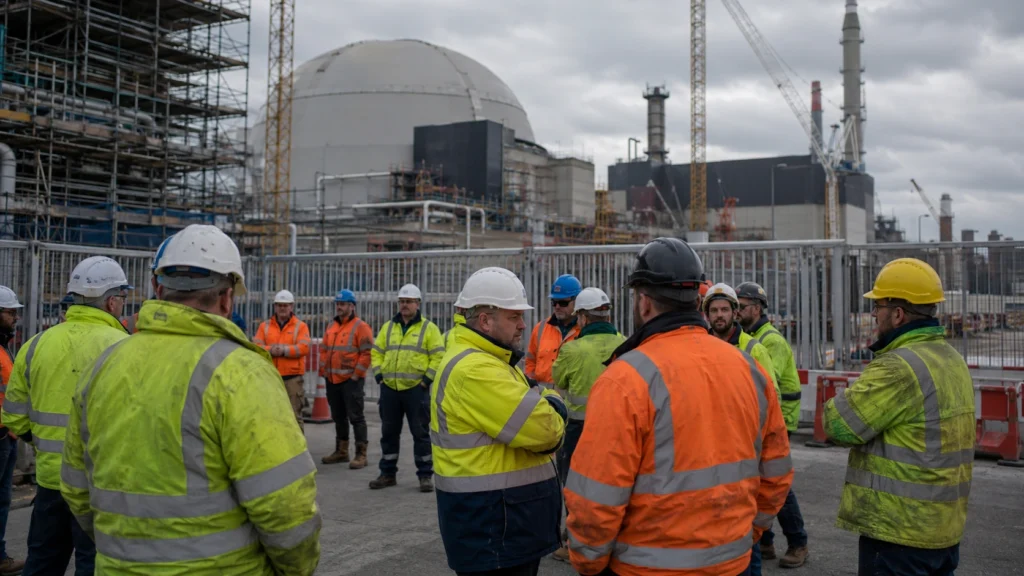
The Sellafield construction strike in June is about nearly 2,000 trades workers preparing to walk out from 15 to 21 June over a disputed nuclear site allowance.
Workers say the payment should recognise the specialist skills, strict safety rules and challenging conditions involved in construction work at the Sellafield nuclear complex in Cumbria.
Unite says employers have failed to engage in meaningful talks, while the union remains open to negotiation.
Key takeaways:
- The strike is planned for 15 to 21 June.
- Nearly 2,000 construction workers are expected to take part.
- The dispute centres on a nuclear site allowance.
- Trades involved include electricians, joiners, pipe-fitters, riggers, welders and groundworkers.
- Unite says workers want fair recognition for specialist site conditions.
- The action could affect project schedules and hazard reduction work.
What Is The Sellafield Construction Strike In June About?
The Sellafield construction strike in June is centred on a pay dispute involving construction workers at the UK’s largest nuclear complex in Cumbria. Nearly 2,000 trades workers are expected to take part in a fresh week-long walkout from 15 to 21 June after talks over a nuclear site allowance failed to move forward.
The dispute is not simply about a general pay rise. Workers are seeking a site-specific payment that recognises the specialist skills, strict safety requirements and challenging conditions involved in working on one of Europe’s most complex nuclear sites.
Background To The Nuclear Site Pay Dispute
Construction workers at Sellafield are involved in major projects, maintenance-related activity and hazard reduction programmes. Their work supports a highly regulated environment where safety, security and precision are essential.
Union Unite has accused the Sellafield construction employers group of failing to enter meaningful negotiations, despite repeated requests for talks. Workers argue that their contribution should be recognised in a way that reflects the conditions they face on site.
| Key Detail | Information |
| Dispute | Nuclear site allowance |
| Location | Sellafield, Cumbria |
| Strike dates | 15 to 21 June |
| Workers involved | Nearly 2,000 |
| Union | Unite |
| Main issue | Recognition for specialist site conditions |
Why The Strike Is Escalating In June?
The action has escalated because workers feel discussions have not produced progress. Unite says it remains willing to negotiate, but members have become frustrated by what they see as a lack of serious engagement from employers.
A construction employment adviser described the situation clearly:
“I often see disputes worsen when workers feel the door to negotiation is closed. In this case, the central issue appears to be recognition, not only basic pay. When people work in a specialist and hazardous environment, they expect that responsibility to be reflected in their terms.”
Why Are Construction Workers At Sellafield Taking Industrial Action?
Construction workers are taking action because they want an additional payment linked to working at Sellafield’s nuclear site. They believe the environment places extra demands on them compared with standard construction sites.
The key reasons include:
- Specialist skills needed for nuclear site construction
- Strict regulatory and safety requirements
- Work carried out in a sensitive and complex setting
- Frustration over limited progress in negotiations
- A belief that other groups on the Sellafield estate receive better recognition
Unite general secretary Sharon Graham said employers at Sellafield need to “start playing fair” by highly skilled workers operating in an extremely challenging environment.
Who Is Involved In The Sellafield Construction Strike?
The dispute involves nearly 2,000 trades workers employed by six subcontractors at the Sellafield site. These workers are not directly involved in running the nuclear site itself, but they provide essential construction and project support.
Trades Expected To Join The Week-Long Walkout
The workers expected to take action include electricians, joiners, pipe-fitters, riggers, welders and groundworkers. These trades are central to construction delivery, infrastructure support and project progress across the site.
| Trade Group | Typical Role On Site |
| Electricians | Electrical installation and systems work |
| Joiners | Structural and finishing tasks |
| Pipe-fitters | Pipework installation and maintenance support |
| Riggers | Lifting and positioning heavy equipment |
| Welders | Specialist metalwork and fabrication |
| Groundworkers | Foundations, ground preparation and civil works |
Subcontractors And The Sellafield Construction Employers Group
The workers are employed across six subcontractors, while the dispute is directed at the Sellafield construction employers group. Unite claims the employer group has not engaged in meaningful talks, which has increased tensions ahead of the June walkout.
When Will The Sellafield Construction Strike Take Place?
The fresh week-long strike is scheduled to run from 15 to 21 June. During this period, participating construction workers are expected to walk out as part of the continuing pay dispute.
| Strike Period | Details |
| Start date | 15 June |
| End date | 21 June |
| Duration | One week |
| Expected participation | Nearly 2,000 trades workers |
| Type of action | Industrial action over site allowance |
The timing is significant because construction work at Sellafield is linked to wider project delivery and hazard reduction programmes. A full week of action could place pressure on employers to return to the negotiating table.
What Is The Nuclear Site Allowance Being Demanded?
The nuclear site allowance is a proposed site-specific payment that would recognise the additional demands of working at Sellafield. Workers argue that the site is not comparable to a typical construction project because of its scale, regulation and safety-sensitive nature.
The allowance would act as recognition for the specialist environment in which workers operate. It would not replace standard wages but would sit alongside existing pay arrangements to reflect the unique nature of the site.
Why Do Workers Say Sellafield Conditions Deserve Extra Recognition?
Workers say Sellafield conditions deserve extra recognition because the site requires high standards of skill, discipline and awareness. The nuclear setting means construction activity must be planned and delivered with particular care.
Specialist Skills Required At The Sellafield Nuclear Site
Sellafield is not a normal construction environment. Trades workers must operate around complex infrastructure, strict rules and high expectations. The workforce supports projects that require accuracy, reliability and close coordination.
Hazards And Regulations Faced By Construction Workers
Construction workers at Sellafield must follow site-specific safety processes and operate in a highly controlled setting. The work can involve additional checks, access controls, training requirements and compliance obligations.
A senior construction project manager explained the point in practical terms:
“I would not compare a nuclear site with an ordinary commercial build. I have worked with teams where every task needed more planning, more paperwork and more caution because the environment demanded it. That level of responsibility should be properly understood during pay talks.”
How Could The Sellafield Strike Affect Site Projects And Hazard Reduction Work?
The strike could affect construction schedules, subcontractor planning and the delivery of some project-related activities. Sellafield is involved in major works and hazard reduction programmes, so any disruption to skilled labour can create pressure across the wider project chain.
Possible effects include:
- Delays to planned construction tasks
- Rescheduling of subcontractor work
- Pressure on project timelines
- Reduced availability of specialist trades
- Increased urgency for renewed negotiations
| Potential Impact | What It Could Mean |
| Project delays | Some construction tasks may be postponed |
| Workforce gaps | Specialist trades may be unavailable |
| Cost pressure | Delays can increase planning and delivery costs |
| Negotiation pressure | Employers may face stronger calls to re-engage |
| Supply chain disruption | Related contractors may need to adjust schedules |
The exact impact will depend on how employers manage workloads during the strike and whether talks restart before or during the action.
What Has Unite Said About The Sellafield Pay Dispute?
Unite has said the dispute is of the employers’ own making and that its members want fair recognition for the work they carry out. The union has also said it remains willing to enter meaningful negotiations.
Unite regional officer Ryan Armstrong said the site negotiating team continues to work to find a resolution. He added that the union has requested discussions so every opportunity to avoid industrial action can be explored.
The union’s position is that workers do not want unnecessary disruption, but they are prepared to strike because they believe the issue has not been properly addressed.
What Could Resolve The Sellafield Construction Strike?

The dispute could be resolved if both sides return to meaningful negotiations and reach an agreement on the proposed nuclear site allowance. A settlement would likely need to address the workers’ central demand for recognition of the unique conditions at Sellafield.
A practical resolution may involve:
- Formal talks between Unite and the employer group
- A clear proposal on site-specific payment
- Recognition of nuclear site working conditions
- A timetable for implementation
- Communication with affected subcontractor workers
The key issue is whether employers are prepared to make an offer that workers consider fair. Without that, the dispute may continue beyond the scheduled June action.
What Does The Dispute Mean For UK Construction And Nuclear Site Workers?
The Sellafield dispute highlights a wider issue in UK construction: how specialist site conditions should be recognised in pay agreements. Workers on complex infrastructure and nuclear projects often face higher levels of regulation, safety responsibility and technical demand.
For small businesses and subcontractors, the dispute also shows how labour relations can affect project stability. When skilled workers withdraw their labour, delays can spread across supply chains, especially where tasks depend on specific trades.
This case may also be watched by other construction workers on regulated sites. A successful agreement could influence expectations elsewhere, while a prolonged dispute may raise concerns about recruitment, retention and morale in specialist construction roles.
Conclusion
The Sellafield construction strike in June is set to become a significant test of relations between construction workers, subcontractors and the Sellafield construction employers group. Nearly 2,000 workers are preparing to walk out from 15 to 21 June over demands for a nuclear site allowance.
At the heart of the dispute is a simple question: should construction workers on one of Europe’s most complex nuclear sites receive extra recognition for their skills, responsibilities and working conditions?
Unite says it remains open to talks, while workers continue to press for meaningful progress. Whether the strike goes ahead as planned may depend on how quickly employers engage with the demand for a site-specific settlement.
FAQs
Why are Sellafield construction workers striking in June?
Sellafield construction workers are striking because they want a nuclear site allowance that recognises the specialist skills, safety requirements and challenging conditions involved in working at the nuclear complex.
How many workers are expected to join the Sellafield strike?
Nearly 2,000 trades workers are expected to take part in the week-long strike from 15 to 21 June.
Which trades are involved in the Sellafield industrial action?
The trades involved include electricians, joiners, pipe-fitters, riggers, welders and groundworkers employed by six subcontractors working at the site.
What is a nuclear site allowance?
A nuclear site allowance is a proposed additional payment that would recognise the extra demands of working in a highly regulated nuclear environment.
Where is the Sellafield nuclear site located?
Sellafield is located in Cumbria and is widely recognised as the UK’s largest nuclear complex.
Could the Sellafield strike delay construction projects?
The strike could affect project schedules if key construction trades are unavailable during the planned week of industrial action.
Is Unite still willing to negotiate over the Sellafield dispute?
Yes. Unite has said it remains willing to enter meaningful negotiations and wants a settlement that recognises the conditions faced by construction workers.
Why is Sellafield considered a complex nuclear site?
Sellafield is considered complex because it involves major nuclear operations, strict safety controls, regulated working conditions and long-term hazard reduction programmes.

John covers a wide range of business topics including technology, productivity, startups, digital transformation, and business development for modern companies.

DPD Delivery Hub Immigration Raid: What Happened?
Direct Answer: What Happened? The DPD delivery hub immigration raid involved Immigration Enforcement officers carrying out early morning checks at DPD depots in Basingstoke and Newbury on Thursday…

UK Home Office Go Home Letters: Meaning, Rules and Impact UK
UK Home Office go home letters are official communications sent to certain migrants whose immigration status may not meet current requirements or whose applications have been refused. However,…
Insights for the Modern
UK Small Business.
Join 15,000+ owners receiving tactical analysis on finance, marketing, and technology. No clutter.
Zero spam. Unsubscribe in one click.