Unite Union Morrisons Dispute Escalates as HGV Drivers Ballot for Strike

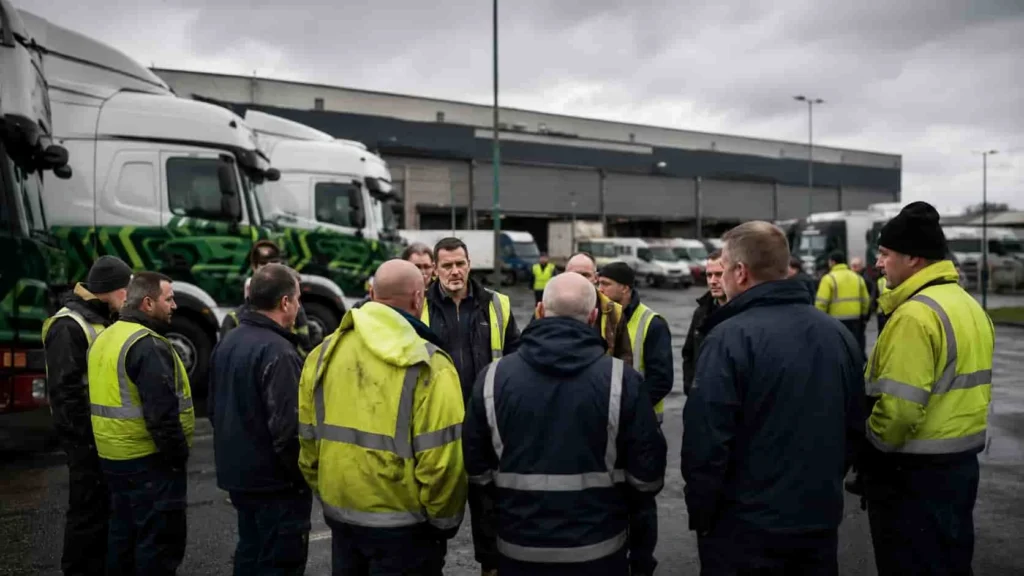
The Unite Union Morrisons dispute has escalated after nearly 500 Eddie Stobart HGV drivers supplying Morrisons supermarkets across northern England were balloted for strike action over concerns about agency worker expansion and reduced employment protections.
Drivers based in Wakefield, Stockton-on-Tees and Northwich claim the increasing use of temporary staff is undermining union agreements, job security and long-term working conditions.
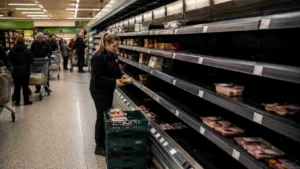
If industrial action moves forward, Morrisons could face supply chain disruption and empty shelves across several regions.
Key Takeaways
- Nearly 500 HGV drivers are involved in the strike ballot
- Unite accuses Eddie Stobart of union-busting practices
- Agency workers now make up around 40% of drivers at some depots
- Drivers fear worsening pay and employment conditions
- Morrisons supermarkets could face delivery disruption
- The ballot remains open until 4 June
- The dispute reflects wider UK logistics sector employment concerns
Why Are Eddie Stobart HGV Drivers Balloting for Strike Action?
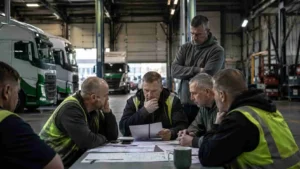
Nearly 500 HGV drivers employed by Eddie Stobart are currently being balloted for strike action following growing concerns over the company’s use of agency workers across Morrisons distribution operations.
The dispute affects workers based at three major depots:
- Wakefield
- Stockton-on-Tees
- Northwich in Cheshire
According to Unite, around 40 per cent of drivers at the Stockton and Northwich depots are now agency workers.
Union representatives claim that instead of replacing drivers with directly employed staff when employees leave, the company is increasingly relying on temporary labour.
Growing Concerns Over Agency Driver Recruitment
Drivers argue that the increased use of agency workers is creating uncertainty within the workforce.
Temporary workers are often employed under different terms and conditions compared to permanent employees, which has raised fears over long-term employment stability.
Unite has accused Eddie Stobart of gradually reducing the number of unionised workers while introducing more insecure employment arrangements. Drivers believe this could weaken collective bargaining agreements already established within the company.
How Unionised Workers Claim Their Roles Are Being Replaced
The main concern among employees is not simply the use of agency drivers itself, but the belief that permanent positions are slowly disappearing.
The company has reportedly confirmed that any future directly employed drivers may also be recruited under reduced terms and conditions compared to existing staff. This has intensified concerns among workers who fear the dispute could permanently alter employment standards within the logistics operation.
A logistics employment adviser described the issue from a workforce perspective: “I’ve seen increasing concern among HGV drivers across the retail sector about temporary contracts replacing stable employment. Workers are worried that once permanent terms are weakened, it becomes much harder to restore those conditions later.”
Impact of Reduced Terms and Conditions on Drivers
Drivers involved in the dispute argue that reduced employment terms could affect several important areas, including:
- Job security
- Overtime arrangements
- Pay progression
- Pension contributions
- Collective bargaining protections
For many drivers, the dispute is not only about pay but also about maintaining long-term employment standards within the UK logistics industry.
How Is the Unite Union Responding to the Morrisons Logistics Dispute?
Unite has strongly criticised Eddie Stobart’s approach to staffing and employment conditions throughout the dispute.
Unite general secretary Sharon Graham publicly condemned what the union describes as “union-busting” practices aimed at weakening existing workforce agreements.
Sharon Graham’s Response to Alleged Union-Busting
Sharon Graham stated that attempts to reduce drivers’ pay and conditions risk creating a “race-to-the-bottom” within the logistics industry.
The union argues that replacing directly employed workers with agency staff undermines established workplace protections and weakens employees’ negotiating power.
Unite has also confirmed that workers involved in the ballot have the union’s full backing should industrial action proceed after the vote closes on 4 June.
Unite’s Position on Employment Standards in UK Logistics
The dispute highlights wider concerns within the UK haulage and retail logistics sectors about increasing reliance on agency labour.
Unite maintains that directly employed drivers should retain access to collective bargaining rights and stable employment terms rather than being replaced by temporary staffing models.
A transport sector consultant explained the broader concern in practical terms: “From what I’ve observed in the logistics sector, disputes like this usually reflect deeper tensions about workforce stability. Drivers want reassurance that long-term employment standards won’t gradually disappear through agency-based recruitment.”
What Is Happening at the Wakefield, Stockton-on-Tees and Cheshire Distribution Depots?
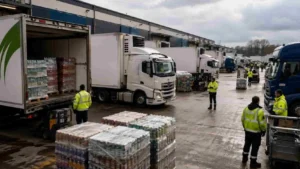
The three distribution depots involved in the dispute play an important role in supplying Morrisons supermarkets across northern England.
These facilities are responsible for transporting a wide range of grocery products, including:
- Fresh food
- Packaged goods
- Household products
- Chilled and frozen items
Because of their importance within the supermarket supply chain, any disruption to deliveries could quickly affect store operations across multiple regions.
At Stockton-on-Tees and Northwich, agency staff now reportedly account for around 40 per cent of the driving workforce. Unite argues that this level of temporary staffing has significantly increased pressure on permanent employees.
The Wakefield depot is also central to Morrisons’ northern distribution network, making the dispute particularly significant for supermarket operations.
Why Are Drivers Opposed to Eddie Stobart’s Employment Practices?
Drivers involved in the ballot believe the company’s current staffing strategy could lead to long-term changes in working conditions across the sector.
One of the main concerns is that agency workers generally do not receive the same employment protections and negotiated benefits available to permanent staff.
Workers also argue that increasing temporary recruitment may weaken union representation over time.
Several issues have become central to the dispute:
- Concerns over insecure contracts
- Reduced employment protections
- Potential decline in negotiated benefits
- Fear of lower future pay standards
- Reduced collective bargaining influence
Many drivers believe that if current trends continue, stable long-term employment within logistics operations could become increasingly limited.
Could Strike Action Cause Supply Chain Disruption for Morrisons Supermarkets?
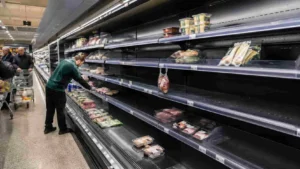
If industrial action proceeds after the ballot closes, Morrisons supermarkets across northern England could experience supply chain disruption.
Potential Effects on Grocery Deliveries Across Northern England
The drivers involved in the dispute are responsible for transporting groceries and stock to Morrisons stores throughout the region.
Any interruption to deliveries may affect:
- Product availability
- Store restocking schedules
- Fresh food deliveries
- Warehouse distribution operations
Retail supply chains rely heavily on consistent transport schedules, particularly for supermarkets handling large volumes of perishable goods.
Risk of Empty Shelves and Delayed Stock Distribution
Unite regional officer Neil Howells warned that strike action could result in empty shelves across parts of northern England if an agreement is not reached.
Although supermarkets often have contingency plans during industrial disputes, prolonged disruption within logistics operations can quickly create operational challenges.
The timing of the dispute also adds pressure as retailers continue managing inflation-related costs and changing consumer demand patterns.
How Are UK Supermarket Logistics Disputes Affecting the Retail Sector?
The Unite Union Morrisons dispute reflects broader pressures affecting the UK retail and logistics industries.
Over recent years, several factors have increased strain on transport operations, including:
- HGV driver shortages
- Rising fuel costs
- Inflation pressures
- Increased demand for supermarket deliveries
- Recruitment challenges within logistics
Many retailers continue adapting to workforce shortages while attempting to maintain delivery reliability and operational efficiency.
The dispute also highlights the growing debate around agency work within the UK transport sector. While temporary staffing can help companies respond to changing demand, unions argue that excessive reliance on agency labour may weaken long-term workforce stability.
For supermarkets, logistics disruptions can have immediate commercial consequences, particularly when customer demand remains high and delivery schedules are tightly managed.
What Are the Key Issues Behind the Unite Union Morrisons Dispute?

| Key Issue | Impact on Workers | Potential Business Impact |
| Agency driver expansion | Reduced job security | Workforce instability |
| Inferior employment terms | Lower employee morale | Increased industrial tensions |
| Collective bargaining concerns | Reduced worker confidence | Greater risk of disputes |
| Driver shortages | Increased workload pressure | Supply chain disruption |
| Temporary staffing growth | Uncertainty among permanent staff | Operational inconsistency |
Can Eddie Stobart and Unite Still Reach an Agreement?
Although tensions remain high, there is still an opportunity for both sides to negotiate before industrial action takes place.
Unite has stated that strikes could potentially be avoided if Eddie Stobart reaches what the union considers a fair agreement regarding employment practices and staffing arrangements.
Neil Howells suggested that Morrisons may also be concerned about the risk of supply disruption if the dispute escalates further.
The ballot remains open until 4 June, giving both parties limited time to continue discussions.
In many logistics disputes, negotiations often intensify as ballot deadlines approach. Businesses typically seek to avoid operational disruption, while unions aim to secure protections for existing workforce agreements.
What Could This Dispute Mean for the Future of UK Logistics Employment?
The dispute may have wider implications beyond Morrisons and Eddie Stobart alone.
Across the UK logistics industry, there is increasing discussion around how businesses balance operational flexibility with stable employment practices.
Many transport companies continue facing pressure to reduce costs while maintaining reliable delivery operations. However, unions argue that long-term reliance on agency labour could gradually reduce workforce protections across the sector.
The outcome of this dispute may influence future discussions around:
- Employment standards in logistics
- Use of agency workers
- Collective bargaining rights
- Driver recruitment strategies
- Workforce retention policies
Industry observers will likely monitor the situation closely, particularly given the ongoing labour challenges affecting UK transport and retail distribution networks.
Conclusion: What Does the Unite Union Morrisons Dispute Reveal About the UK Logistics Sector?
The Unite Union Morrisons dispute highlights growing tensions within the UK logistics sector over employment practices, workforce stability and the increasing use of agency labour.
Nearly 500 Eddie Stobart HGV drivers supplying Morrisons supermarkets across northern England are currently being balloted for strike action amid concerns about reduced terms and conditions and the gradual replacement of unionised staff.
If industrial action proceeds, Morrisons could face supply chain disruption and operational pressure across key regions. However, negotiations remain possible before the ballot closes.
The dispute also reflects wider challenges facing the UK retail logistics industry, including driver shortages, rising operational costs and ongoing debates around employment standards. The outcome could shape future conversations about workforce protections and staffing models throughout the sector.
FAQs
Why are Morrisons HGV drivers considering strike action?
Drivers are concerned about the growing use of agency workers and claims that permanent unionised roles are being replaced with less secure employment arrangements.
What role does Unite Union play in the dispute?
Unite is representing the affected HGV drivers and supporting the strike ballot process while negotiating with Eddie Stobart over employment concerns.
How many Eddie Stobart drivers are involved in the ballot?
Nearly 500 HGV drivers across Wakefield, Stockton-on-Tees and Northwich are involved in the ballot.
Could Morrisons supermarkets face supply shortages?
Yes, Unite has warned that strike action could lead to delivery disruption and empty shelves across parts of northern England.
What are agency driver contracts in the logistics sector?
Agency contracts involve temporary workers supplied through recruitment agencies rather than direct long-term employment with the company.
When will the strike ballot results be announced?
The strike ballot is scheduled to close on 4 June, after which the results may be confirmed.
How could this dispute affect the UK retail industry?
The dispute may increase attention on employment practices, labour relations and workforce stability within the supermarket logistics sector.

Jermaine writes informative business content related to entrepreneurship, finance, innovation, operations, and emerging opportunities for growing businesses in the UK.

Andy Burnham Land Tax: Impact on House Prices and Taxes
Andy Burnham's land tax proposal centres on replacing or reforming parts of the UK's current property tax system through a land value or proportional property tax. While no…

Victoria Derbyshire Faced a Workplace Conduct Investigation at the BBC
Victoria Derbyshire, a well-known BBC journalist and Newsnight presenter, reportedly faced a workplace conduct investigation after concerns were raised by colleagues about her communication style and workplace interactions.…
Insights for the Modern
UK Small Business.
Join 15,000+ owners receiving tactical analysis on finance, marketing, and technology. No clutter.
Zero spam. Unsubscribe in one click.