DWP SP on Bank Statement | What It Means and Why It Appears?

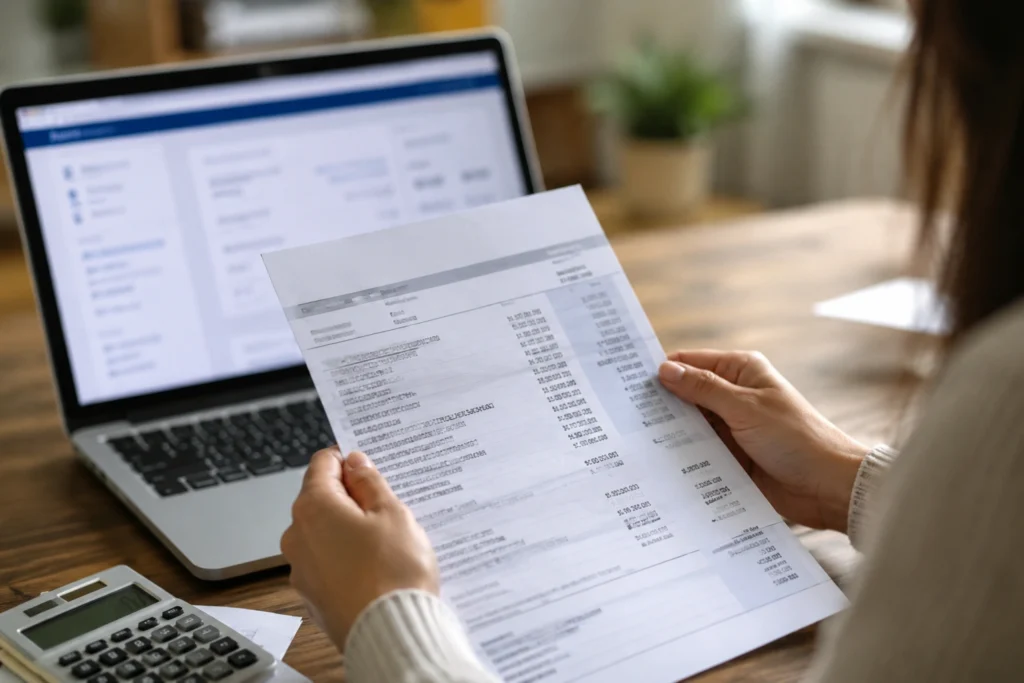
Have they recently noticed DWP SP on bank statement and wondered what it means? This payment reference often causes confusion, particularly when it appears unexpectedly or alongside other transactions. In most cases, it relates to a DWP state pension payment made by the Department for Work and Pensions.
However, understanding the exact meaning, payment purpose, and circumstances in which it appears can help avoid unnecessary concern. This guide explains the DWP SP meaning, who receives it, and what steps to take if the payment is not recognised.
What Does DWP SP on a Bank Statement Mean?
DWP SP on bank statement usually means a State Pension payment from the Department for Work and Pensions. The letters “DWP” refer to the government department that manages pensions, benefits, and financial support for eligible people in the UK. The letters “SP” commonly refer to State Pension.
When this reference appears on a bank statement, it normally means that a person has received a pension-related payment into their account. This may be a regular State Pension payment, a backdated amount, or an adjusted payment after the Department for Work and Pensions has reviewed the person’s claim.
| Bank Statement Reference | Likely Meaning | Common Reason It Appears |
| DWP SP | State Pension | Regular pension payment |
| DWP | Department for Work and Pensions payment | Benefit or pension payment |
| DWP PC | Pension Credit | Extra support for pension-age people |
| DWP PIP | Personal Independence Payment | Disability-related support |
| DWP UC | Universal Credit | Working-age benefit payment |
Understanding the DWP SP Meaning
The dwp sp meaning is mainly connected to the UK State Pension. A person may see this reference once they reach State Pension age and begin receiving payments based on their National Insurance record.
The State Pension is not paid automatically in every case. The person normally needs to claim it. Once the claim is accepted, the Department for Work and Pensions sends the payment directly to the chosen bank, building society, or credit union account.
Why the Department for Work and Pensions Uses Payment References?
The Department for Work and Pensions uses payment references to make transactions easier to identify. Since the DWP handles many types of payments, short codes help banks and recipients understand where a payment has come from.
A department for work and pensions payment may relate to pensions, disability benefits, carer support, or income support. The reference helps separate one payment type from another.
Why Does DWP SP Appear on a Bank Statement?
DWP SP appears on a bank statement because the Department for Work and Pensions has paid money into the account. In most cases, this is linked to a dwp state pension payment.
It may appear every four weeks if the person receives State Pension regularly. It may also appear as a one-off amount if there has been a delay, correction, or backdated payment.
Common Reasons for a DWP State Pension Payment
A DWP SP payment may appear because:
- The person has started receiving State Pension.
- A scheduled State Pension payment has been made.
- A backdated pension amount has been paid.
- A correction has been made after a DWP review.
- The bank account is shared with someone who receives State Pension.
A pension adviser described the issue clearly:
“I often speak with people who panic when they see DWP SP on a bank statement, especially if the amount is different from what they expected. In many cases, it is simply a State Pension payment showing under a shortened bank reference.”
How Payment References Help Identify Deposits?
A state pension payment reference helps people identify government income more easily. This is especially useful for pensioners who receive more than one income source, such as a private pension, workplace pension, savings interest, rental income, or benefit support.
For small business owners, payment references are also useful because personal and business income can sometimes become mixed. If a State Pension payment enters an account used for business purposes, the reference helps the owner and accountant identify it as personal income rather than trading income.
Is DWP SP a State Pension Payment Reference?
Yes, DWP SP is normally a state pension payment reference. It is one of the common ways a State Pension payment may appear on a bank statement.
The exact wording can vary depending on the bank. Some statements may show “DWP SP”, while others may show a longer or slightly different reference. The meaning is usually the same when it relates to a State Pension payment from the Department for Work and Pensions.
| Term | Meaning | Why It Matters |
| DWP | Department for Work and Pensions | Shows the payment came from the UK government department |
| SP | State Pension | Shows the payment is likely pension-related |
| DWP SP | State Pension payment | Helps identify regular pension income |
| Payment reference | Bank transaction label | Helps confirm the source of money |
A person should still check the amount and payment date if they are unsure. The presence of DWP SP alone is a strong indication, but the safest approach is to compare it with DWP letters or online pension information.
Who Receives a DWP State Pension Payment?
A dwp state pension payment is generally received by someone who has reached State Pension age and has a qualifying National Insurance record.
The State Pension amount can differ from person to person. Not everyone receives the same figure. Some people receive the full new State Pension, while others receive a lower amount because they have fewer qualifying years on their National Insurance record.
Factors that may affect the amount include:
- Number of qualifying National Insurance years
- Gaps in employment or contributions
- Whether the person was contracted out in the past
- Whether they receive the basic or new State Pension
- Whether they delayed claiming State Pension
A person may also receive Pension Credit if their income is low. This is separate from State Pension, but both payments can come from the Department for Work and Pensions.
How Can Someone Check Whether a DWP Payment on a Bank Statement Is Correct?

A person can check whether a dwp payment on bank statement is correct by comparing the payment with official records and expected payment dates.
The first step is to look at the amount. If the payment matches the expected State Pension amount, it is likely correct. The second step is to check the date. State Pension is usually paid every four weeks, and the payment day is linked to the last two digits of the person’s National Insurance number.
Reviewing Payment Dates and Amounts
State Pension payments are usually made on a weekday. The exact payment day depends on the National Insurance number.
| Last Two Digits of National Insurance Number | Usual State Pension Payment Day |
| 00 to 19 | Monday |
| 20 to 39 | Tuesday |
| 40 to 59 | Wednesday |
| 60 to 79 | Thursday |
| 80 to 99 | Friday |
Bank holidays can change the payment date. If the usual payment day falls on a bank holiday, the money may arrive earlier. This can make a DWP SP payment look unexpected when it is actually correct.
Contacting the Department for Work and Pensions
If the payment amount looks wrong, the person should contact the Pension Service or the relevant DWP department. They should have their National Insurance number, bank details, and recent payment information ready before calling.
A benefits support worker explained it this way:
“When I help someone check a DWP SP payment, I always ask them to compare three things first. The payment date, the amount received, and any recent letter from the DWP. Those three details usually explain the payment.”
What Other DWP Payment References Might Appear on a Bank Statement?
DWP SP is not the only reference that may appear on a bank statement. The Department for Work and Pensions pays different benefits, so various short references may be used.
| Bank Reference | Possible Payment Type | Who It May Apply To |
| DWP SP | State Pension | People receiving State Pension |
| DWP PC | Pension Credit | Pension-age people on low income |
| DWP PIP | Personal Independence Payment | People with long-term health conditions or disabilities |
| DWP ESA | Employment and Support Allowance | People unable to work due to illness or disability |
| DWP CA | Carer’s Allowance | Eligible unpaid carers |
| DWP UC | Universal Credit | Working-age claimants |
These codes are not always displayed in exactly the same way by every bank. Some banks may shorten the reference further, while others may show more transaction detail.
Can DWP SP Appear on a Joint or Business Bank Account?
Yes, DWP SP can appear on a joint account if the State Pension recipient has chosen that account for payments. This is common for married couples, civil partners, or family members who manage finances together.
It can also appear on a business bank account if the recipient has given those bank details to the Department for Work and Pensions. However, this is not ideal for clear financial record keeping.
For UK small business owners, it is better to separate personal pension income from business income. If State Pension is paid into a business account, it may need to be clearly marked in bookkeeping records as personal income. This helps avoid confusion when preparing accounts or speaking with an accountant.
A small business accountant shared this insight:
“I always advise clients to keep State Pension payments away from business income where possible. When DWP SP appears in a business account, I record it separately so it does not get mistaken for sales, client payments, or taxable trading income.”
What Should Someone Do If They Do Not Recognise a DWP SP Payment?
If someone does not recognise a DWP SP payment, they should check carefully before spending it. Although it is often a genuine State Pension payment, mistakes or misunderstandings can happen.
The person should review recent DWP letters, check whether another account holder receives State Pension, and compare the amount with expected pension payments.
| Situation | What It May Mean | What To Do |
| Payment matches usual pension amount | Regular State Pension | Keep record as normal |
| Payment is higher than expected | Backdated or adjusted amount | Check recent DWP letters |
| Payment appears in a joint account | Other account holder may receive State Pension | Ask the account holder |
| Payment is completely unexpected | Possible error or unrecognised claim update | Contact DWP |
| Payment date is earlier than usual | Bank holiday adjustment | Check calendar and payment schedule |
The safest approach is to contact the Department for Work and Pensions if the payment cannot be explained. If a payment has been made in error, the DWP may ask for it to be repaid.
How Are DWP State Pension Payments Calculated?
DWP State Pension payments are calculated mainly from the person’s National Insurance record. The amount depends on how many qualifying years the person has built up during their working life.
A qualifying year can come from paid work, self-employment, National Insurance credits, or voluntary contributions. Some people may have gaps if they lived abroad, earned below the required threshold, or were not paying contributions for a period.
The State Pension system can be different depending on whether the person reached State Pension age before or after the introduction of the new State Pension. This is why two people of similar age may receive different amounts.
| Factor | Possible Effect on DWP State Pension Payment |
| Full National Insurance record | May lead to full State Pension entitlement |
| Missing qualifying years | May reduce the weekly pension amount |
| Voluntary contributions | May increase future entitlement |
| Deferring State Pension | May increase payments later |
| Backdated claim | May result in a larger one-off payment |
| Contracted-out history | May affect the final pension calculation |
Someone who is unsure about their entitlement can check their State Pension forecast through official government services. This can help them understand how much they may receive and whether they can improve their record.
When Are State Pension Payments Usually Made?
State Pension is usually paid every four weeks into the bank account chosen by the claimant. Some people may think of it as a monthly payment, but it is normally based on a four-week cycle.
The payment day depends on the last two digits of the National Insurance number. This system helps spread payments across the week.
A DWP SP payment may arrive earlier than expected when the normal payment day falls on a bank holiday. For example, if a pension payment is due on a Monday bank holiday, it may be paid on the previous working day.
This can sometimes make people think they have received an extra or unusual department for work and pensions payment. In reality, it may simply be the usual payment arriving early.
What Are the Key Facts About DWP SP on a Bank Statement?

DWP SP on bank statement is one of the most common references linked to State Pension payments. It is usually nothing to worry about when the recipient is expecting pension income.
However, it is still important to check the payment if the amount looks unusual, if the payment appears in a joint account, or if the recipient does not yet claim State Pension.
| Key Point | Explanation |
| Main meaning | DWP SP usually means State Pension |
| Paid by | Department for Work and Pensions |
| Payment type | Government pension income |
| Usual frequency | Every four weeks |
| May appear early | Bank holidays can affect payment dates |
| May vary | Back payments or corrections can change the amount |
| Best action if unsure | Check DWP letters or contact the Pension Service |
For UK individuals and small business owners, the main point is to identify the payment correctly. A state pension bank statement code should be recorded as pension income, not business revenue or a private transfer.
Conclusion
In most situations, DWP SP on bank statement refers to a State Pension payment issued by the Department for Work and Pensions. While the reference is generally straightforward, checking the payment amount, date, and any recent DWP correspondence can help confirm that it is correct.
Understanding the DWP SP meaning, payment schedule, and related bank statement codes makes it easier to manage finances and identify government payments accurately. If there is any uncertainty, contacting the DWP remains the best course of action.
Frequently Asked Questions
Can DWP SP Payments Change Over Time?
Yes, DWP SP payments can change due to annual pension increases, corrected records, backdated payments, or changes in entitlement.
Does DWP SP Always Refer to the State Pension?
In most cases, DWP SP refers to State Pension, but the recipient should confirm with the DWP if the payment is unclear.
Can a Person Receive DWP SP and Other Benefits at the Same Time?
Yes, some people may receive State Pension along with other support, such as Pension Credit, Attendance Allowance, or disability-related benefits.
What Happens If a State Pension Payment Is Missed?
The person should check bank processing times first, then contact the Pension Service if the payment has not arrived.
Can DWP SP Payments Be Backdated?
Yes, State Pension payments may be backdated in some situations, especially if a claim or correction has been processed later.
How Can Someone Update Their Bank Details for State Pension Payments?
They should contact the Pension Service and provide the correct account details securely.
Is DWP SP Taxable in the UK?
Yes, the State Pension is taxable income, although tax is not usually deducted before payment.

Jermaine writes informative business content related to entrepreneurship, finance, innovation, operations, and emerging opportunities for growing businesses in the UK.

HMRC Wage Raid Payroll Checks: What UK Employers Need to Know?
HMRC wage raid payroll checks are unannounced workplace visits carried out by HM Revenue and Customs to verify that businesses are paying employees correctly and meeting payroll reporting…
Caoimhe Jennings Pension Struggle Raises Compassion Concerns
Caoimhe Jennings’ pension struggle has raised significant compassion concerns across Northern Ireland and the wider UK. Living with a terminal brain tumour, she reportedly sought access to an…
Insights for the Modern
UK Small Business.
Join 15,000+ owners receiving tactical analysis on finance, marketing, and technology. No clutter.
Zero spam. Unsubscribe in one click.